



Hiring a good Real Estate Agent is a very important part of the home buying process. Here are the Top 10 Reasons To Hire A Real Estate Agent.
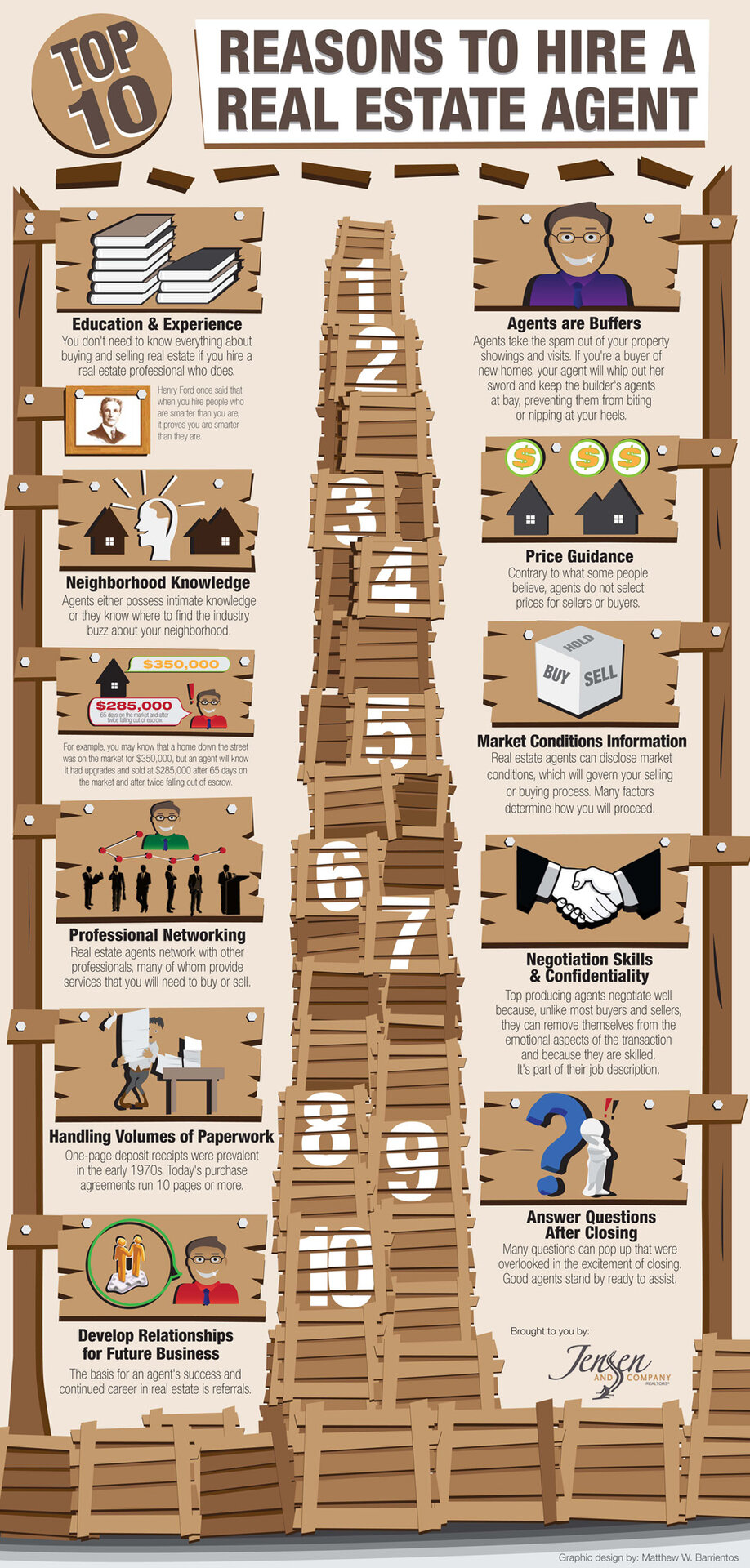
Hiring a good Real Estate Agent is a very important part of the home buying process. Here are the Top 10 Reasons To Hire A Real Estate Agent.
Buying and selling flipped properties can be challenging in this market depending on the financing the buyer is trying to get. For example, many people don’t know that conventional financing or VA does NOT have an anti flip policy, but many lenders still apply their own rules, and that all FHA buyers now have to wait >90 days to purchase a home that was fixed and flipped by a seller. Understanding the different financing rules that are in place today for buyers and sellers and flipped properties is essential for success in today’s marketplace.
Conventional Guidelines for Financing Flipped Properties
What many people do not know, is that conventional financing does not have an anti Flip policy, so there is no limit on the amount a profit a seller can make in any given amount of time when reselling a home.
But, what buyers and Sellers needs to look out for, is lenders who will apply their own set of “overlays”, which are rules a lender will apply on top of regular conventional underwriting guidelines to minimize their risk on the transaction. For example, there are some lenders who will ask for two appraisals, if the profit to the seller is more than 20% in less than 90 days for example.
Another issue that comes into play, is when a buyer needs to get financing over 80%, because now the buyer has to qualify for mortgage insurance “PMI”. When “PMI” companies have to get get involved in the transaction, they may want to see more documentation to justify the appreciation on the property, so be prepared to document the value increase thoroughly with supporting documentation, or once again, a particular lender may ask for a second appraisal.
Therefore, the secret to funding a flipped property using conventional financing, is to make sure the lender has No Flip Overlays.
FHA Guidelines for Financing Flipped Properties
The FHA just Discontinued their 90 Day Flip Waiver as the end of December 2014! This waiver allowed FHA buyers to purchase properties that are being resold within 90 days of being fixed and flipped. This means that all FHA buyers will have to wait >90 days to purchase a home that was fixed and flipped by a seller.
IMPORTANT: If you are shopping for homes and looking to use FHA financing, make sure your purchase contract and loan application are dated 90 days AFTER the home was acquired by the seller, otherwise it will not qualify for financing. Click HERE for some other FHA rules to be aware of.
If there is greater than 100% profit to the seller within 180 days, the underwriter may ask for a 2nd appraisal to substantiate the value of the home. The seller will also probably have to provide proof of all the repairs done to increase the value of the property by 100%.
VA Guidelines for Financing Flipped Properties
There is also a misconception out there that the VA has their own set of rules for flipped properties. The VA does NOT have an anti flip rule, but the catch once again is, there are many lenders who will apply their own set of “overlays” (lender rules) on a flipped transaction to minimize their risk on a transaction..
So it is important ask a lender upfront what their flipped rules are, so you choose a lender who will follow the VA’s flip rules. I have several VA lenders that we are approved with, who do NOT have any additional VA rules for financing flipped properties.
Address All Concerns Upfront on a Property
A good idea is to address any concerns upfront on all flipped properties. A good rule of thumb for agents and buyers is to check the purchase date when the seller bought the property, as this will determine many of the rules above.
If the property is being resold within 90 days, this is usually where additional rules may apply, so make sure to ask the right questions.
Another good rule of thumb for buyers and agents, is to confirm with the lender if they follow regular conventional and VA’s rules for financing flipped properties, or what “overlays” would they apply on a property..
Doing this homework upfront will ensure the buyer will qualify for financing and there will be no issues getting the transaction closed for all parties involved.
If you have any questions about a flipped property scenario, please do not hesitate to contact me directly at 858-200-9602 to chat.

What are Supplemental Property Taxes? This is a question we hear a lot from new homebuyers and homeowners. They have been with us in California since July of 1983, but many people do not know what they are, what they do, and how they affect a property. To help you better understand what they are, here are the most frequently asked questions with answers that people have about supplemental property taxes.
What is a supplemental tax bill?
In addition to annual taxes, you may be responsible for paying supplemental property taxes. State law requires the local county tax assessor to reappraise property upon a change in ownership or new construction. The supplemental assessment reflects the difference between the new assessed value and the old or prior assessed value. If the property is reassessed at a higher value than the old assessed value, a supplemental bill will be issued. If the property is reassessed at a lower value than the old assessed value, a refund will be issued. Supplemental tax bills are mailed directly to the property owner and are their responsibility.
Q. When did this tax come into effect?
A. The Supplemental Real Property Tax Law was signed by the Governor in July of 1983 and is part of an ambitious drive to aid California’s schools. This property tax revision is expected to produce over $300 million per year in revenue for schools.
Q. How will Supplemental Property Taxes affect me?
A. If you purchase a home in California, you may be required to pay a supplemental property tax which will become a lien against your property, as of the date of ownership change or the date of completion of new construction.
Q. When and how will I be billed?
A. “When” is not easy to predict. You could be billed in as few as three weeks, or it could take over six months. “When” will depend on the individual county and the workload of the County Assessor, the County Controller / Auditor and the County Tax Collector. The assessor will appraise your property and advise you of the new supplemental assessment amount. At that time you will have the opportunity to discuss your valuation, apply for a Homeowner’s Exemption and be informed of your right to file an Assessment Appeal. The County will then calculate the amount of the supplemental tax and the tax collector will mail you a supplemental tax bill. The supplemental tax bill will identify, among other things, the following information: the amount of the supplemental tax and the date on which the taxes will become delinquent.
Q. Can I pay my Supplemental Tax Bill in installments?
A. All supplemental taxes on the secured roll are payable in two equal installments. The taxes are due on the date the bill is mailed and are delinquent on specified dates depending on the month the bill is mailed as follows:
(1) If the bill is mailed within the months of July through October, the first installment shall become delinquent on December 10 of the same year. The second installment shall become delinquent on April 10 of the next year.
(2) If the bill is mailed within the months of November through June, the first installment shall become delinquent on the last day of the month following the month in which the bill is mailed. The second installment shall become delinquent on the last day of the fourth calendar month following the date the first installment is delinquent.
Q. How will the amount of my bill be determined?
A. There is a formula used to determine your tax bill. The total supplemental assessment will be prorated based on the number of months remaining until the end of the tax year, June 30.

Q. Can you give me an idea of how the proration factor works?
A. The supplemental tax becomes effective on the first day of the month following the month in which the change of ownership or completion of new construction actually occurred. If the effective date is July 1, then there will be no supplemental assessment on the current tax roll and the entire supplemental assessment will be made to the tax roll being prepared which will then reflect the full cash value. In the event the effective date is not on July 1, then the table of factors represented on the following panel is used to compute the supplemental assessment on the current tax roll.
|
If the effective date is: |
The Proration Factor is: |
| August 1 | .92 |
| September 1 | .83 |
| October 1 | .75 |
| November 1 | .67 |
| December 1 | .58 |
| January 1 | .50 |
|
If the effective date is: |
The Proration Factor is: |
| February 1 | .42 |
| March 1 | .33 |
| April 1 | .25 |
| May 1 | .17 |
| June 1 | .08 |
EXAMPLE:
The County Auditor finds that the supplemental property taxes on your new home would be $1,000 for a full year. The change of ownership took place on September 15 with the effective date being October 1: the supplemental property taxes would, therefore, be subject to a proration factor of .75 and your supplemental tax would be $750.
Q. Will my taxes be prorated in escrow?
A. No, unlike your ordinary annual taxes, the supplemental tax is a one-time tax which dates from the date you take ownership of your property or complete the construction until the end of the tax year on June 30. The obligation for this tax is entirely that of the property owner.
I hope you found these tips helpful. If you have any questions please feel free to contact me directly at 858-442-2686.
As it is now 8-10 years since the housing downturn during the great recession, there are more and more borrowers who suffered a financial hardship in the recent past who are getting back into the market to purchase a home or refinance again in 2018. There were some positive changes recently to the waiting periods, when a buyer or homeowner can obtain a new mortgage and repurchase a home again after a foreclosure, short sale or bankruptcy, here is a summary of the 2018 Mortgage Waiting Periods below.
Buyers Coming Back into the Market.
As the housing downturn started back in 2008, there are many buyers who suffered a financial hardship who are now back in the market to purchase a home. Here are some results from a survey by Afterforeclosure.com.
The survey reports that 79% of those who lost their home are interested in buying again, 41% of buyers have higher incomes than before the housing crash, 63% report their debts are lower than before the crash, and 46% want to purchase in a lower price range.
The survey also reports that buyers are unaware of programs available to them to help them purchase after just a year or two, therefore knowing the time lines when buyers can repurchase again after foreclosure or short sale is very important.
9 Out of 10 Borrowers Use One of These Three Financing Options
Borrowers today essentially have 3 options when it comes to obtaining financing to purchase a home. In fact, more than 9 out of 10 mortgages are either funded by Fannie Mae/Freddie Mac, the FHA or VA!
So if you are looking to purchase and need financing, it is more than likely you will be using one of these 3 financing options. Here are the current 2018 waiting periods when you can repurchase a home or refinance, after either a short sale, foreclosure or bankruptcy.
1. When Can I Repurchase or Refinance Again After a Foreclosure?
Here are the current 2016 waiting periods when you can repurchase or refinance again after a Foreclosure and want to obtain either Conventional, FHA or VA financing.
Conventional. It is 7 years before you can repurchase again using Conventional financing.
*New Rule added. There was a new change implemented recently (see below), whereby if you included the foreclosure in a bankruptcy, you can qualify after 4 years instead of 7 years. Contact me for more details on how to qualify under this new rule.
For conventional financing, the bankruptcy guidelines have been updated to indicate that if a mortgage debt has been discharged through bankruptcy, even if a foreclosure action is subsequently completed to reclaim the property in satisfaction of the debt, the borrower is held to the bankruptcy waiting periods and not the foreclosure waiting period. This means a buyer can now qualify for conventional financing after 4 years from the bankruptcy date, instead of the foreclosure date of 7 years.
FHA. It is 3 years before you can repurchase again using FHA financing. Or, see below for how a FHA buyer can qualify again after just 1 year if they experienced an economic event.
VA. It is only 2 years before you can repurchase again using VA financing.
2. When Can I Repurchase or Refinance Again After a Short sale?
Here are the current 2016 waiting periods when you can repurchase or refinance again after a Short Sale and want to obtain either Conventional, FHA or VA financing.
Conventional. It is 4 years before you can repurchase again using Conventional financing. Please note, it is used to be 2 years if you had 20% down, but this was updated recently to 4 years no matter how much the down payment is.
*New Rule added. There was a new change implemented recently (see below), whereby if you included the short sale in a bankruptcy 13, you can qualify after 2 years instead of 4 years. Contact me for more details on how to qualify under this new rule.
For conventional financing, the bankruptcy guidelines have been updated to indicate that if a mortgage debt has been discharged through bankruptcy, even if a short sale action is subsequently completed on the property, the borrower is held to the bankruptcy waiting periods and not the short sale waiting period. This means a buyer can now qualify for conventional financing after 2 years from the bankruptcy date, instead of the short sale date of 4 years.
FHA. It is 3 years before a buyer can repurchase again using FHA financing. But here are 2 loopholes to help you qualify less than 3 years.
*Tip #1: The FHA has a loophole that not many people know about, if the FHA buyer did not have any late payments before their short sale, they are allowed to automatically qualify again for FHA financing.
Tip #2. The FHA reduced the time line that buyers must wait after a bankruptcy, foreclosure or short sale before qualifying for an FHA-backed mortgage, if a buyer experienced an “economic event” whereby their household income fell by 20% or more for a period of at least six months. The period had previously been two years following a bankruptcy, and three years following a foreclosure or short sale. The agency has now reduced the waiting period to ONE YEAR. For additional information on how to qualify under this new rule, I wrote an article recently on this subject for the San Diego Union Tribune newspaper, click HERE.
VA. It is only 2 years you can repurchase again using VA financing.
3. When Can I Repurchase or Refinance Again After Bankruptcy?
Here are the current 2016 waiting periods when you can purchase or refinance again after a Bankruptcy and want to obtain either Conventional, FHA or VA financing.
Conventional. For a chapter 7 Bankruptcy it is 4 years and 2 years for a chapter 13 bankruptcy, before you can repurchase again using Conventional financing.
FHA. For a chapter 7 Bankruptcy it is 2 years and 1 year for a chapter 13, before you can repurchase again using FHA financing. Or, see above for how you can qualify again after just 1 year if you experienced an economic event.
VA. For a chapter 7 Bankruptcy it is 2 years, and 1 year for a chapter 13 bankruptcy, before you can repurchase again using VA financing.
4. What if I don’t fit the rules above? New Portfolio Mortgage Options.
What if I don’t meet the waiting period rules above? There are new mortgage options available for borrowers who do not fit these more traditional mortgage options above. Portfolio lenders are stepping in to provide mortgage options for buyers who cannot qualify for conventional, FHA and VA financing, and with much better terms than private financing.
For example, we have lenders who will provide financing for buyers who are as little as one month out of a foreclosure, short sale or BK. These lenders will require a larger down payment, depending on your credit scores, and assets etc.
Mortgage rates will also be higher than traditional loans and the rates you hear on TV and the radio. But these new programs are a great option for borrowers who until recently, probably only had an option of private (hard money) financing with very high rates and costs. Contact me for more details on how to qualify for these new mortgage programs.

But another part of the puzzle to helping you get in a position to repurchase again, is ensuring you have also started to re-establish your credit again since the financial hardship. For example, even though the required time line of say 2 or 3 years may have passed so you can qualify for conventional or FHA financing again, it is important you have also started to rebuild your credit and have the required credit scores to qualify again for financing.
For example, conventional financing requires a minimum credit score of 620. Whereas the FHA and VA only require a 580 credit score to qualify for financing again.
The first step is to get a copy of your credit report to verify if the financial hardship or discharge is reporting correctly and to also see what your scores are. We can provide you with a copy of your credit report if needed.
The next step is to start rebuilding your credit scores. I have a “Credit Education and Improvement” section on my website, click HERE, which will help you better understand how credit works and how to improve your scores, so you are able to score the best rates and financing terms.
If you need major credit repair, I have several credit repair experts I can put you in touch with.

Tips for borrowers
There are many people who suffered a financial hardship in the past who are already getting back into the market again to purchase a home. As the VA only requires 2 years from a short sale or a foreclosure, and the FHA only 1 year in some cases, there are a lot more people who are eligible to repurchase again, but probably don’t know they are.
A lot of buyers I talk to who suffered a financial hardship in the past, are genuinely surprised when they realize that the FHA or VA for example allows them to purchase again after just 2-3 years!
I also wrote a piece for the San Diego Union Tribune discussing these topics above, which explain the “Guidelines for repurchasing a home after a Financial Hardship'”, click HERE.
As mortgage rates are still near record lows, and it is cheaper to buy a home than rent in some areas of California, purchasing a home is a good financial decision.
If you have any questions about any of these waiting periods above, or you would like to get approved for financing, please do not hesitate to contact me directly at 858-442-2686.
Tax season may feel like a burden for some Americans, but homeowners have plenty of advantages when it comes to claiming deductions. The U.S. tax code is designed to offer incentives to homeowners, and by taking advantage of these breaks, 1040-filing citizens can maximize their financial investment in homeownership.
Whether a home is financed via a mortgage, or paid-in-full with cash, there are a multitude of tax-savings opportunities associated with owning a home. Of course, every homeowner’s financial situation is different, so please consult with a tax professional regarding your individual tax liability.
Mortgage interest paid to a lender is tax-deductible and, for some homeowners, interest paid ca provide a large tax break — especially in the early years of a home loan. This is because the standard mortgage amortization schedule is front loaded with mortgage interest.
At today’s mortgage rates, annual interest payments on a 30-year loan term exceed annual principal payments until loan’s 10th year. Mortgage interest tax deductions are extended to second mortgages, too.
Interest paid on refinances, and home equity lines of credit (HELOC) are tax-deductible as well. However, restrictions apply on homeowners who raise their mortgage debt beyond their property’s fair market value.
The Internal Revenue Service (IRS) imposes a $1 million loan size cap. Loans for more than one million dollars are exempt from this tax deduction.
Mortgage tax deductions can extend beyond your monthly payment. Discount points paid in connection with a home purchase or a refinance are often tax deductible too.
A discount point is a one-time, at-closing fee which gets a borrower access to mortgage rates below current “market rates”.
As an example, if the current market mortgage rate is 5 percent, paying one discount point may get you access to a mortgage rate of 4.75%. The IRS treats discount points as “prepaid mortgage interest” which, in turn, can render them tax-deductible.
When discount points are paid in conjunction with a purchase, the cost may be deducted in full in the year in which they were paid, dollar-for-dollar. With respect to a refinance, discount points are not fully tax-deductible in the year in which they are paid.
With a refinance, discount points are typically amortized over the life of the loan. The cost of one discount point on a 30-year loan can be deducted at 1/30 of its value per tax-calendar year.

Homeowners typically pay real estate taxes to local and state entities. These property taxes can often be deducted in the year in which they are paid. If your mortgage lender currently escrows your taxes and insurance, it will send an annual statement to you which you can file with your complete federal tax returns. Your accountant can help determine the payment’s tax deductibility.
Home Improvements
For tax-paying homeowners, certain types of home improvement projects are tax-deductible. Home improvements made for medical reasons, for example, can be tax-deductible. If you are making home renovations to accommodate a chronically ill or disabled person, and the renovations do not add to the overall value of the home, the project costs are typically 100% tax deductible. Repairs and improvements made for aesthetic purposes are not tax-deductible.
Home Offices
Homeowners who work from their residence can typically deduct the expenses of maintaining a qualified home office. Allowable tax deductions for a home office include renovations to the room(s), telephone lines, and the cost of heat and electric. Before claiming a home office on your returns, though, be sure to speak with an accountant to understand the benefits and liabilities. There are caveats to claiming home office tax deductions on your tax returns, and the rules can be tricky.

As you put away the holiday gifts, set aside an empty box to collect all the year-end tax documents for 2013 that will soon begin arriving in your mailbox. Among the papers to look for:
Form W-2 from your employer, which shows your gross income, tax-deductible contributions to your retirement and flexible-spending accounts, and state and federal taxes withheld from your paycheck.
There’s a flurry of 1099 forms from your bank, broker, pension and IRA administrators, and the Social Security Administration. These forms report taxable interest and dividends you received, plus any retirement income.
Form 1098 from your mortgage lender. It reports mortgage interest and real estate taxes you paid. If you paid college tuition or interest on a student loan, look for Form 1098-T or 1098-E.
Form 1099-G from your state if you collected unemployment during 2013.
Form 1099-MISC. Independent contractors should receive one from each client who paid $600 or more in 2013. If you think you’re missing a form, be sure to check your e-mail. And if you still haven’t received a document by January 31, contact your financial institution or other provider.
If you bought a home in 2013, make sure to give a copy of the final HUD closing statement to your tax preparer, so you can take advantage of all the write offs you are now entitled too. Let me know if you need a copy of this.
If you have questions about getting approved for financing, or you would like a free rate quote, please feel free to contact me directly at 858-442-2686 or just reply to this message.
VA financing is one of the best mortgage products available in the market today, as the VA makes it easy for their members to refinance or purchase a home with zero down financing and No monthly mortgage insurance. This list of VA frequently asked questions and VA tips will help you understand the in-and-outs of how the VA mortgage program works. I also included 6 tips below too that you can use to help get a VA purchase offer accepted.
The VA program saw its biggest year ever in 2016, according to a report in the US Finance Post. Loan volume nearly doubled from five years before, with the VA backing more than 707,000 loans. And homeownership among veterans is looking good – especially compared to the wider public. The national homeownership rate has fallen to below 63%, a half-century low. Meanwhile, according to VA estimates, the homeownership rate among veterans is around 82%.
With VA mortgage rates still around 3.5% on a 30-year fixed, the cost of financing a home with a VA loan is still near all time lows.
VA Loan Frequently Asked Questions
Here is a list of the most frequently asked questions that VA buyers and homeowners have about VA financing. I also included 4 tips below too that will help a VA buyer get their purchase offer accepted.
Who is eligible for VA financing?
A veteran is eligible for VA financing if he/she served on active duty in the Army, Navy, Air Force, Marine Corps, or Coast Guard and was honorably discharged after 24 continuous months of active duty, or the full period for which called, or ordered to active duty, but not less than 90 days (during wartime) or 181 continuous days (during peacetime).
Can VA Buyers Purchase With $0 Down?
Yes, VA buyers can get 100% financing here in San Diego to $500k? VA financing is still the only loan program that allows 100% financing in any area (FYI the USDA allows 100% financing, but this is strictly for rural properties).
We can also give a VA buyer a 3% lender credit to cover ALL their closing costs. This means a VA buyer can purchase a home with No down payment due or closing costs either, and they will only have to pay for the appraisal fee out of pocket. Make sure to ask me how you can qualify for this lender credit towards closing costs too.
As the FHA still requires a 3.5% down payment, and most conventional loan programs require down payments anywhere from 5% to 20% depending on the credit profile of the buyer, this is still putting home ownership out of reach for many buyers.
What is the Minimum Credit Score to Qualify For VA Financing?
Most VA lenders only need a 620 credit score to offer 100% VA financing. I have 2 VA lenders that will offer 100% financing with a 580 credit score. Also some VA lenders allow a buyer to qualify up to a 57% debt to income (DTI) ratio on VA loans, Fannie Mae is now capped at 45% in most cases.
Most banks have easier qualifying and credit guidelines for VA buyers. Because many first time buyers typically don’t have a lot of established credit, getting qualified for a conventional loan can be more difficult.
Do VA Buyers Pay Any Monthly Mortgage Insurance?
Another huge advantage for VA buyers is that they do not have to pay any monthly mortgage insurance (MI) on their loans, as VA loans are backed by the government. Remember all FHA loans require mortgage insurance. So having no monthly mortgage insurance allows VA buyers to have a lower monthly mortgage payment or purchase a bigger home.
What is the Maximum VA Loan I can Qualify For?
The VA offers financing based on county loan limits. For example, the VA offers 100% financing up to $612,950 for buyers in San Diego, and $636,150 for LA county and Orange County, and $424,100 for Riverside county. You can check your county loan limit by clicking HERE
*To borrow over the county loan limit, (which would be > purchase price of $612,950 in San Diego), there is a formula the VA uses to calculate what a VA buyers down payment requirement is. Feel free to contact me if you have a VA scenario and you want to calculate what the down payment requirement is.
What is a VA Streamline Refinance?
A VA streamline Refinance is the best refinance program in the market. This program allows a homeowner with an existing VA loan refinance into a new VA loan with no appraisal or income requirements.
Because you already have a VA loan, the VA allows you to refinance your current loan balance into a lower rate with very limited documentation so you can take advantage of lower rates and save extra money :). It is a fantastic program available only to VA members. Ask me for more details how to qualify for this program
With current VA mortgage rates around 3.5% on a 30 year fixed, this leaves VA loans near the the cheapest they have ever been in history. Ask me for more details how to qualify for this VA streamline refinance program.
How Are VA interest Rates Compared to Other Loan Programs?
VA mortgage rates are usually the lowest in the industry and are typically .375% lower than conventional rates. *Make sure to ask me how we can cover ALL your closing costs with our VA lender credit option.
Because the VA insures the loans for their members, they are able to offer lower rates to buyers.
What is the VA Waiting Period after a Foreclosure, Short sale or Bankruptcy?
Short Sale: It is only 2 years before a buyer can repurchase again using VA financing.
Foreclosure: It is only 2 years before a buyer can repurchase again using VA financing.
Bankruptcy: For a chapter 7 Bankruptcy it is 2 years and 1 year for a chapter 13, before a buyer can repurchase again using VA financing.
Can I Buy an Investment Property With VA?
No, you can only purchase a primary residence using VA financing, no second or vacation homes either. But if you already own a home with VA financing on it, you can qualify again to purchase a new home with a VA loan.
There is a misconception out there that the seller must pay for some or all of a VA buyer’s closing costs. The seller is NOT required to pay ANY costs for the buyer, but is allowed to pay up to 4% for VA loans.
But there are certain “VA non-allowable” costs for which a VA buyer is forbidden to pay, (for example No escrow fees, wiring, notary, tax service or processing fees are allowed to be charged).
Here is a good tip to help get a VA offer accepted, so this issue of who covers these VA non allowable fees does not become an issue. It is advised that the following language be inserted in to the purchase contract, so the seller is not put off by the VA offer: “Seller not responsible for any buyer closing costs, regardless of the selected loan program. All agency-related “non-allowable” costs to be borne/paid by lender”.
This means the VA Non-Allowable fees will be paid by a lender credit instead of the seller, we do this for all our VA buyers. So now the seller will NOT dismiss the VA offer right away, does NOT have to cover any closing costs, negotiations are easier, and the buyer and seller can strike a deal.
Here are 6 tips to help a VA buyers purchase offer get accepted. I also wrote an article for the San Diego Union Tribune discussing VA financing and some tips for buyers, you can view the article HERE
It is a good idea for a veteran to submit a personal letter with their purchase offer, and to tell the seller why they want to buy their property. Because if you can tug at the heart strings of the seller, then they may be more apt to choose your offer over others! There will be some sellers who will take great pleasure in having the opportunity to help our veteran families.
Include a VA DU underwriting approval with your offer. A DU (desktop) underwriting approval is when a buyer’s loan application and credit report has been ran through the VA’s automated underwriting systems and was approved.
A DU underwriting approval displays the most important information on a buyer’s profile, which gives the seller a better idea of the strength of the buyer. For example, a DU approval displays a buyer’s credit scores, debt to income ratios, assets, reserves, any applicable down payment and the type of loan program they are approved for.
The zero down payment requirement with VA means less skin in the game. We can’t argue with this because VA allows 100% financing, so this does amount to very “little skin in the game” from a buyer.
Therefore it’s a good idea to include proof of reserves and assets and any applicable down payment funds along with your offer, so this shows the seller the buyer has applicable funds to close if any additional funds are needed to close the transaction.
Want to show a seller how serious your offer is? Consider putting down a bigger deposit in earnest money. This may seem risky for some, but earnest money is there for a reason. If you are uncertain about putting a “noticeable” amount of earnest money on the table, it may be a sign to the seller that you are uncertain about the house itself.
Assuming you hold up your end of the bargain and you have the right contingencies in place, it won’t cost you any more in the long run since the deposit goes towards your down payment if financing is involved.
*As a VA buyer typically qualifies for zero down financing, they will get their deposit back at closing.
It’s a good idea to ask the seller’s agent upfront what you can do to make the offer more enticing to the sellers.
For example, can you be flexible on the closing date for the seller? Also, a purchase offer asking for seller credits to pay for your closing costs will usually place behind an offer that does NOT ask for any seller credits. Some people assume just because a buyer does not have funds for closing costs, to just ask the seller to cover them.
SOLUTION: To make a buyers offer more competitive, we can give the buyer a lender credit to cover ALL the closing costs.
How does this work? It’s easy, instead of taking say a 3.5% 30 year fixed rate, take a slightly higher rate of 3.75% instead, and now there is a lender credit of roughly 2.5% available that can be used to pay ALL a buyers closing costs.
Not only is this a good negotiating tactic so the buyer and seller can strike a deal, but of course it saves a buyer money too. We present this option to all our buyers.
Being able to close a transaction faster is another way to entice the seller to accept your offer in this competitive market. For example, if a seller is reviewing 3 offers, and there is a 21 day offer, a 30 day and 45 day offer, many times the seller will take the faster closing.
My company Citywide Financial Corp can close a Conventional, FHA or VA Purchase Transaction in 21-25 days. We have an outstanding team set up and dedicated to help close transactions fast.
Full transparency upfront is the key to getting an offer accepted these days, because usually the “Path of Least Resistance” is what we look for when reviewing offers. As many times the offer that is presented the clearest, is flexible and addresses any issues upfront, is the offer that will be picked.
Because of the large number of veterans that are living in California, helping VA buyers plays an important role in the local housing markets. My brother-in-law is currently in the Navy and my father-in-law is ex Navy, so I especially enjoy working with VA buyers.
VA buyers are always a pleasure to work with, and it feels good to know we are giving back a little to our military friends by helping them obtain home ownership, as they sacrifice so much for all of us on a daily basis.
My company is approved directly with the VA, so we are able to offer all the best programs that are available to our military friends. If you have any questions about getting approved for a VA loan, please feel free to contact me directly at 858-442-2686.
I look forward to chatting soon.
FHA financing is a terrific loan program for homebuyers and homeowners. Currently 1 in 5 buyers are using FHA to finance a home. With it’s low down payment requirements, easier qualification rules for buyers with less than perfect credit, and flexible loan programs to allow co-signers etc, FHA financing plays a huge role in the housing market by helping many borrowers finance a home that would not be able to otherwise. This list of FHA frequently asked questions and FHA tips will help you understand the in-and-outs of how the FHA mortgage program works.
FHA Loan Frequently Asked Questions
What is the FHA?
FHA stands for Federal Housing Administration. The FHA was formed in 1934 and was moved to the U.S. Department of Housing and Urban Development (HUD) in 1965. FHA is the world’s largest mortgage insurer. The FHA does not “make” the loan — it insures the loan for the lender.
What is FHA mortgage insurance?
FHA mortgage insurance premiums (MIP) are premiums you’ll pay at closing, and in the monthly mortgage payment, to insure your lender’s loan against default. The amount of FHA MIP paid is linked to the size of your down payment, and the length of your loan.
Homeowners making a down payment of 10% or more and financing via a 15-year mortgage pay the least amount of FHA MIP. Homeowners making the minimum down payment of 3.5% and using a 30-year loan, will pay more FHA MIP.
How Do I Cancel FHA Mortgage Insurance?
If you put down less than 10%, you will pay FHA MIP for the life of the loan, so the only way to cancel it would be to refinance into a conventional loan. If you put down more than 10%, FHA MIP will cancel after a certain amount of years. See HERE for a separate FHA article I wrote on when and how FHA mortgage insurance will cancel.
What down payment is required for an FHA loan?
Most FHA loans only require a 3.5% down payment. The 3.5% is calculated against the your home’s purchase price or its appraised value, whichever is lower. For example, if you buy a home for $300,000 and the home appraises for $310,000, your 3.5% down payment will be based on the $300,000 figure, regardless of what the home “is worth”.
TIP: We can give FHA buyers a 2% – 3% lender credit to cover ALL their closing costs. Make sure to ask me how you can qualify for this lender credit to help pay all your closing costs.
What is the Maximum Loan I can Qualify For?
FHA offers financing based on county loan limits. For example, FHA buyers can get 3.5% down payment financing up to a loan of $690,000 in San Diego, $726,000 in Los Angeles and Orange County), and $484,350 in Riverside and San Bernardino. See HERE for the maximum loan limits for your county.
*Please note that interest rates are better for loans under $484,350 which are known as FHA conforming loans, and rates are higher for loans >$484,350, as these are considered FHA jumbo loans.
What is a FHA Streamline Refinance?
A FHA streamline Refinance is a terrific refinance program available to homeowners who already have a FHA loan. This program allows a homeowner with an existing FHA loan refinance into a new FHA loan with no appraisal or income requirements.
Because you already have a FHA loan, the FHA allows you to refinance your current loan balance into a lower rate with very limited documentation so you can take advantage of lower rates and save extra money  . It is a fantastic program available only to FHA homeowners members.
What is the FHA waiting period after a foreclosure, bankruptcy or short sale?
Short Sale: It is 3 years before a buyer can repurchase again using FHA financing. *TIP: The FHA has a loophole that not many people know about, if the FHA buyer did not have any late payments before their short sale, they are allowed to automatically qualify again for FHA financing.
Foreclosure: It is 3 years before a buyer can repurchase again using FHA financing.
Bankruptcy: For a chapter 7 Bankruptcy it is 2 years and 1 year for a chapter 13, before a buyer can repurchase again using FHA financing.

FHA Reduces Wait Times for Buyers Who Had Foreclosure or Short Sale
The FHA reduced the time buyers must wait after a bankruptcy, foreclosure or short sale before qualifying for an FHA-backed mortgage, if the buyer experienced an “economic event” whereby their household income fell by 20% or more for a period of at least six months.
The period had previously been two years following a bankruptcy, and three years following a foreclosure or short sale. The agency has now reduced the waiting period to ONE YEAR.
For additional information on how to qualify under this new rule, I wrote an article recently on this subject for the San Diego Union Tribune newspaper, see HERE
What Credit Score is Required for FHA?
Most lenders only require a credit score of 580 to qualify for a FHA loan.
Can I use a cash down payment gift for an FHA loan?
Yes, FHA mortgage guidelines allow for cash gifts of down payment. Down payment gifts may come from a relative, an employer, an FHA-approved charitable organization, or a government housing grant program. Cash gifts may not come from friends or co-workers. All cash down payment gifts must be accompanied by an FHA Gift letter.
Are FHA Loans for first-time home buyers only?
No, FHA loans are not restricted to first-time home buyers. Anybody can use an FHA mortgage. Whether you’ve owned a home before does not affect your FHA mortgage eligibility.
Can I Buy an Investment Property With FHA?
No, you can only purchase a primary residence using FHA financing, no second or vacation homes either.
Tips for FHA Buyers Purchasing Condos!
FHA buyers have to be careful when looking to buy a condo, as the complex has to be FHA approved. Here are 4 tips to ensure you are buying a condo that will qualify for FHA financing.
1. Is the complex currently FHA approved? Check HERE
2. What are the owner occupied ratios? FHA requires 51% Owner Occupied.
3. Are there >15% of the units currently 60 days delinquent on their HOA dues? (FHA requires <15%)
4. Is there any current litigation in the complex? (None allowed).
TIP: Did you know PUD’s do NOT have to be FHA approved for buyers to obtain financing? I have seen this a lot recently whereby a complex is Not showing up FHA approved and the agent and FHA buyer give up looking in the complex because they assume all the properties are “Condos”. But upon further research it’s discovered that many of these properties are actually detached condos built within a condo project and are classified as PUDs and NOT condos, and therefore do not need to be FHA approved for financing.
Tips for Buying Flipped Homes With FHA Financing
As investors continue to scoop up properties and flip them to FHA buyers, it is important to know when you are allowed to go into contract on a home that was flipped.
FHA’s 90 Day Flip Rule! Be careful here as FHA buyers have to wait >90 days to purchase a home that was fixed and flipped by a seller.
Down Payment Tip: Create a Bridal Registry Account
Did you know the FHA allows couples to set up a “Bridal Registry Account” if they are planning on getting married soon and want to accumulate funds for their down payment to buy a home? This is a great way for “married to be” couples to come up with their down payment to buy a home. Here’s how it works—3 simple steps:
1. Couple opens a savings account prior to the wedding (label it “Bridal Registry”).
2. Gifts are deposited.
3. All of the 3.5% down payment can come from these gift funds.
No gift letters. No paper trails. Just a simple savings account labeled “Bridal Registry account” and buyers are on their way to having the wedding present of their dreams.
Buyers Can Purchase a Home with a FHA 203(k) mortgage?
The FHA 203(k) mortgage is similar to a construction loan. With the 203k, you can buy a home and finance its major repairs into the purchase price. The 203k allows for almost anything — roof replacement, garage addition, new flooring and finishes, and more.
Use a Co-Signer to Qualify to Purchase a Home
If a buyer needs help qualifying to purchase a home, the FHA allows a co-signer to help them qualify. The co-signer does NOT have to live in the home either. Also, an unmarried couple can also purchase a home together using FHA financing too.
FHA Buyers Can Purchase a 3-4 Unit Property
Yes, the FHA allows buyers to purchase a 3-4 unit home with FHA financing and they only have to put down 3.5% to qualify. Buyers can live in one unit and rent out the other 3, they can also use the rental income from the other 3 units to qualify for a loan. This is a great way for buyers to start out as a real estate investor.
The FHA Good Neighbor Next Door Program
The FHA Good Neighbor Next Door program (GNND) is a special FHA program for teachers, law enforcement officers, firefighters and emergency medical technicians. The Good Neighbor Next Door program allows eligible buyers to purchase HUD homes at a 50% discount from the list price, and with a down payment of just $100. You must only occupy the home as your principal residence for three years. Let me know if you want further information on this.
I hope you found this FHA Q & A article useful. If you have any questions about FHA or getting approved for financing, please feel free to contact me directly at 858-442-2686.
A 1031 Exchange is a great investment opportunity for home buyers. These exchanges need to be understood by buyers, while investment property owners, now or in the future, need to understand the benefits of these 1031 exchanges.
What is a 1031 exchange?
A 1031 exchange is part of the Internal Revenue Service’s tax code which allows for an exchange of ‘like properties’. This exchange can be a very beneficial way to postpone capital gains taxes on your investments sales.
In real estate, a 1031 exchange on property is for ‘like kind’ properties that are in the United States. It is a sale of one property and the purchase of 1-3 (or more) properties of the same market value (in total or more), or not more than 200% of sold property, or as many properties as desired but at least 95% of the initial first property sale amount. See why you need a good certified public accountant!
Why does one do these 1031 exchanges?
First, it can not be done on your primary residence and secondly, you do it because there are tax advantages that will SAVE YOU MONEY. I am not an accountant, so make sure to talk to someone in the field to explain how it will benefit you specifically.


The Tax Advantages of a 1301 Exchange
Let us look at what advantages you can gain by doing this with an investment property. Well you want to be in a lower capital gains bracket when you finally sell investment real estate and you want to take a property gain when your capital gains is the least monetary taxable amount.
Why pay the government tax now when you can pay later at a lower capital gains rate? 1031 exchanges have a very finite time limit point to be aware of when you start on this road and an ‘qualified intermediary’ (third party) usually must be part of any 1031 transaction you do.
What kind of time limits are you talking about? Once you sell your investment property, when doing a 1031 exchange, you have 45 days from closing to identify the ‘like kind’ properties. Remember ‘like kind’ property must be exchanged for equal or greater value than the property you are selling. If it is not, you will be responsible for a capital gain tax. In addition, the investment property you are buying must take place within 180 days of the closing of the first property or within the tax year of the 1031 exchanger (whichever is less).
Since we are talking about ‘investment’ property as such in real estate, the capital gains exclusion of $250,000 if single or $500,000 if married does not come into play here (since this capital gain exclusion is only for principal residences). If at some point you want to make the investment property your primary home, then sell and use the capital gains exclusion, you must, as the owner, hold the home as principal residence for a period of years first (at least five years) prior to selling it.
What does this all mean to you as a potential real estate investor?
Talk to your accountant and CPA to ensure you will have a qualified property to do a 1031 exchange and do it without triggering a capital gains tax now. This is an untapped business product that can allow your real estate investment to grow untouched by Uncle Sam for a number of years. If you have any questions for me, please feel free to contact me directly.
The FHA just made it easier for buyers with previous financial hardships to qualify for an FHA-backed loan again. This is welcome news for buyers who went through short sales or foreclosures during the recent economic downturn. Under the new program, the FHA indicates a buyer can repurchase again after one year instead of three, provided they can document they lost 20% of their income.

FHA Change Eases Way for More Buyers
The FHA announced this week they will reduce the time buyers must wait after a bankruptcy, foreclosure or short sale before qualifying for an FHA-backed mortgage. The period had previously been two years following a bankruptcy, and three years following a foreclosure or short sale. The agency has now reduced the waiting period to ONE YEAR.
“FHA recognizes the hardships faced by these borrowers, and realizes that their credit histories may not fully reflect their true ability or propensity to repay a mortgage,” FHA Commissioner Carol Galante said in the letter.
But, fulfilling the new, more lenient waiting period won’t automatically qualify borrowers for an FHA-backed loan. Borrowers will have to show that they experienced an “economic event” whereby their household income fell by 20% or more for a period of at least six months. They must demonstrate that they have fully recovered from the event (is their credit and employment stable again?), and agree to complete housing counseling prior to closing (an easy 1 hour online course).
For example, say an individual lost his job during the recession, couldn’t pay the mortgage and eventually was foreclosed upon. Under standard FHA waiting times, that person might not be eligible for a new loan for up to three years. However, if the applicant qualifies as having experienced “an economic event” — defined in the new guidance as “any occurrence beyond the borrower’s control that results in loss of employment, loss of income or both” that causes a 20 percent decline in household income for at least six months — the applicant will now be allowed to qualify to obtain a new FHA-insured mortgage in as little as one year instead of three.
For additional information on how to qualify under this new rule, I wrote a piece recently on this subject for the San Diego Union Tribune newspaper, see HERE . I write articles every few weeks for the Union Tribune’s Real Estate section at the weekend, I hope you can check some of them out.
Conventional, VA and FHA Repurchase Rules After a Financial Hardship
Here are the rules for repurchasing again after suffering a foreclosure, a short sale or a BK, and a buyer is looking to obtain either Conventional, VA or FHA financing. Currently more than 9 out of 10 mortgages are either funded by Fannie Mae/Freddie Mac, the FHA or VA! So if a buyer is looking to purchase and needs financing, it is more than likely they will be using one of these 3 financing options.
1. When Can I Repurchase Again After a Short sale?
Here are the time lines for when a buyer can repurchase again after a Short Sale and they are trying to obtain either Conventional, FHA or VA financing.
FHA. It is 3 years before a buyer can repurchase again using FHA financing. *TIP: The FHA has a loophole that not many people know about, if the FHA buyer did not have any late payments before their short sale, they are allowed to automatically qualify again for FHA financing.
VA. It is only 2 years before a buyer can repurchase again using VA financing.
Conventional. Until recently it was 4 years before a buyer can repurchase again using Conventional financing. TIP: But Fannie Mae implemented a new rule recently that allows buyers to repurchase again using conventional financing after only 2 years instead of 4, as long as they put 20% down (see chart below) and their loan application is approved by the Fannie Mae automated underwriting engine. Contact me for more details.
2. When Can I Repurchase Again After a Foreclosure?
Here are the time lines for when a buyer can purchase again after a Foreclosure and they are trying to obtain either Conventional, FHA or VA financing.
Conventional. It is 7 years before a buyer can repurchase again using FHA financing.
FHA. It is 3 years before a buyer can repurchase again using FHA financing.
VA. It is only 2 years before a buyer can repurchase again using VA financing.
3. When Can I Repurchase Again After Bankruptcy?
Here are the time lines for when a buyer can purchase again after a Bankruptcy and they are trying to obtain either Conventional, FHA or VA financing.
Conventional. For a chapter 7 Bankruptcy it is 4 years and 2 years for a chapter 13 bankruptcy, before a buyer can repurchase again using Conventional financing.
FHA. For a chapter 7 Bankruptcy it is 2 years and 1 year for a chapter 13, before a buyer can repurchase again using FHA financing.
VA. For a chapter 7 Bankruptcy it is 2 years, and 1 year for a chapter 13 bankruptcy, before a buyer can repurchase again using VA financing.
Helping Buyers Rebuild Their Credit
As the housing downturn is now 6 years old, there are more and more buyers coming into the market who suffered a financial hardship in the past.
But it is very important that buyers have also started to re-establish their credit again since their hardship, because even though the required time line of say 2 or 3 years may have passed so they can qualify for conventional or FHA financing again, it is important that buyers have also started to rebuild their credit too, and also have the required credit scores to qualify again for financing. For example, the FHA and VA only require a 620 credit score to repurchase again.
The first step is for a buyer to get a copy of their credit report to verify if their financial hardship or discharge is reporting correctly and to also see what their scores are. Buyers can go to www.annualcreditreport.com to get a FREE copy of their credit report (CA consumers are allowed 1 free credit report per year).
Then the next step is for buyers to start rebuilding credit scores. I have a “Credit Education and Improvement” section on my website, devoted to helping buyers and consumers understand how credit works and how to improve their scores, so they are able to score the best rates and financing terms, see HERE
Tips for buyers and agents
There are lots of buyers who suffered a financial hardship in the past who are already getting back into the market again to purchase a home. And as Conventional financing now requires only 2 years (if the buyer has 20% down), and the VA only requires 2 years from a short sale or a foreclosure, and the FHA only 1-3 years, there are a lot more buyers who will be eligible to repurchase again, but just don’t know they can.
If you have any questions about any of these repurchase time lines above, or you would like to get approved for financing, please do not hesitate to contact me directly at 858-442-2686.
Our underwriters have been warning us about an increase in borrowers who are accidentally disqualifying their loan before funding. For example, they advise that borrowers are going out and buying furniture on credit or a new car before closing, or they change jobs, which unfortunately may now disqualify their loan before closing. These mistakes will happen and will continue to happen if borrowers are not being coached properly before or during the loan process until they close escrow. Here are the 9 most common mistakes that borrowers make, which may accidentally disqualify their loan before their loan funds.

The 9 Most Common Mistakes Borrowers Make
I have seen each of these happen at one time or another on a loan over the years. For example, just recently we had a couple who co-signed on a student loan for their son. This extra debt increased their debt to income ratios and they no longer qualified for the loan.
Here are 9 of the most common mistakes that borrowers make, which may accidentally disqualify their loan before closing.
WARNING: The Lender Will Pull Your Credit Again Before Closing
It is also important that borrowers are aware of a rule, that requires a lender to re-pull their credit report just prior to closing and to look for any changes. If the “final” credit report doesn’t match the original credit report, the mortgage may be subject to a complete re-underwrite and, in a worst case scenario, a loan application denial.
This ensures a loan is priced properly and is funded on the borrower’s credit risk at closing, as opposed to at application; because a lot can change with a borrowers profile while a loan is in-process during a 30-45 day period.

Some of the things underwriters are looking for when they re-pull your credit:
Each of the above is a red flag to underwriting, so it is very important that borrowers are aware their credit will be reviewed again before the loan funds. A golden rule for borrowers to follow is, they should NOT purchase anything on credit until AFTER the loan funds.

A List of Do’s and Don’ts to Follow Until Your Loan Closes
Here is a Do’s and Don’ts list that I put together below, that borrowers should follow until their loan funds. It is a good idea to print this out and keep it handy, as this list will serve as a reminder and ensure no mistakes will be made and you will have a smooth loan closing.

It’s Important to Manage Your Credit Until Your Loan Funds
It’s important that borrowers today are being coached properly until their loan funds, and they have a checklist of rules to follow from the initial date of their loan application, until the loan funds, otherwise mistakes will happen.
I continue to hear horror stories from my underwriters and friends in the industry, of borrowers going out and buying furniture or a new car on credit, or switching jobs or going on disability, which means they do not qualify for the loan anymore.
Therefore, a golden rule for borrowers to follow is, they should NOT purchase anything on credit until AFTER their loan funds, and if they have any changes in employment or any other questions they are concerned about, they need to bring them up immediately so we can provide a solution.
If you have any questions, or you would like a copy of this Do’s and Don’ts list above, please feel free to contact me directly at 858-442-2686 or by email at mdeery@citywidefinacialcorp.com and I can send you a copy.


